The city gate "Churer Tor" in Feldkirch
Built before 1270, completely rebuilt in 1491.
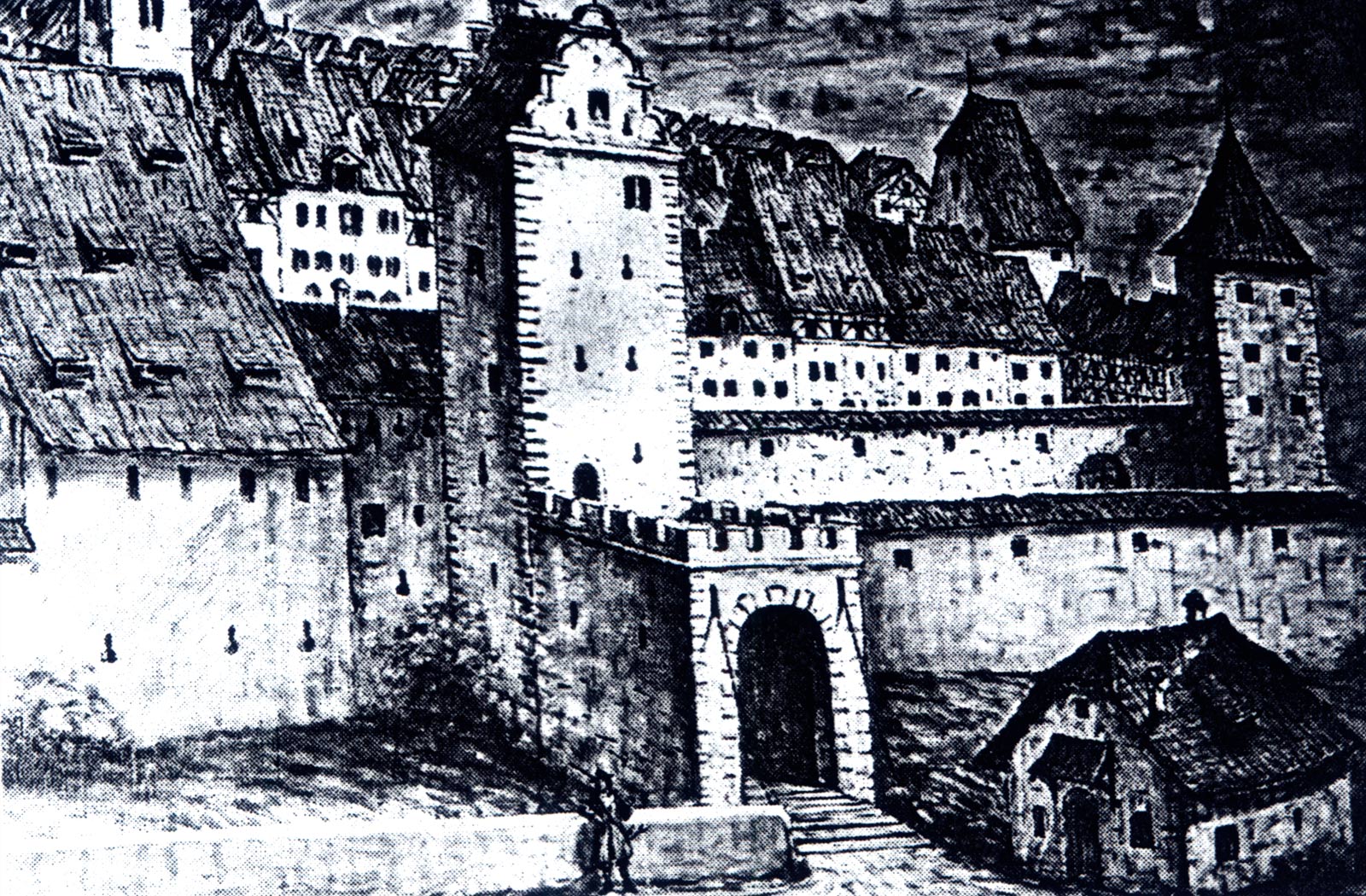
Until the early 19th century, the old town of Feldkirch was surrounded by a ring of fortifications comprising city walls, a moat and city gates. Of its original four city gates, only the Churer Tor and the Mühletor remain today.
The crenellated porch was demolished after 1826 when the city moats were levelled and the Hirschgraben was filled in.
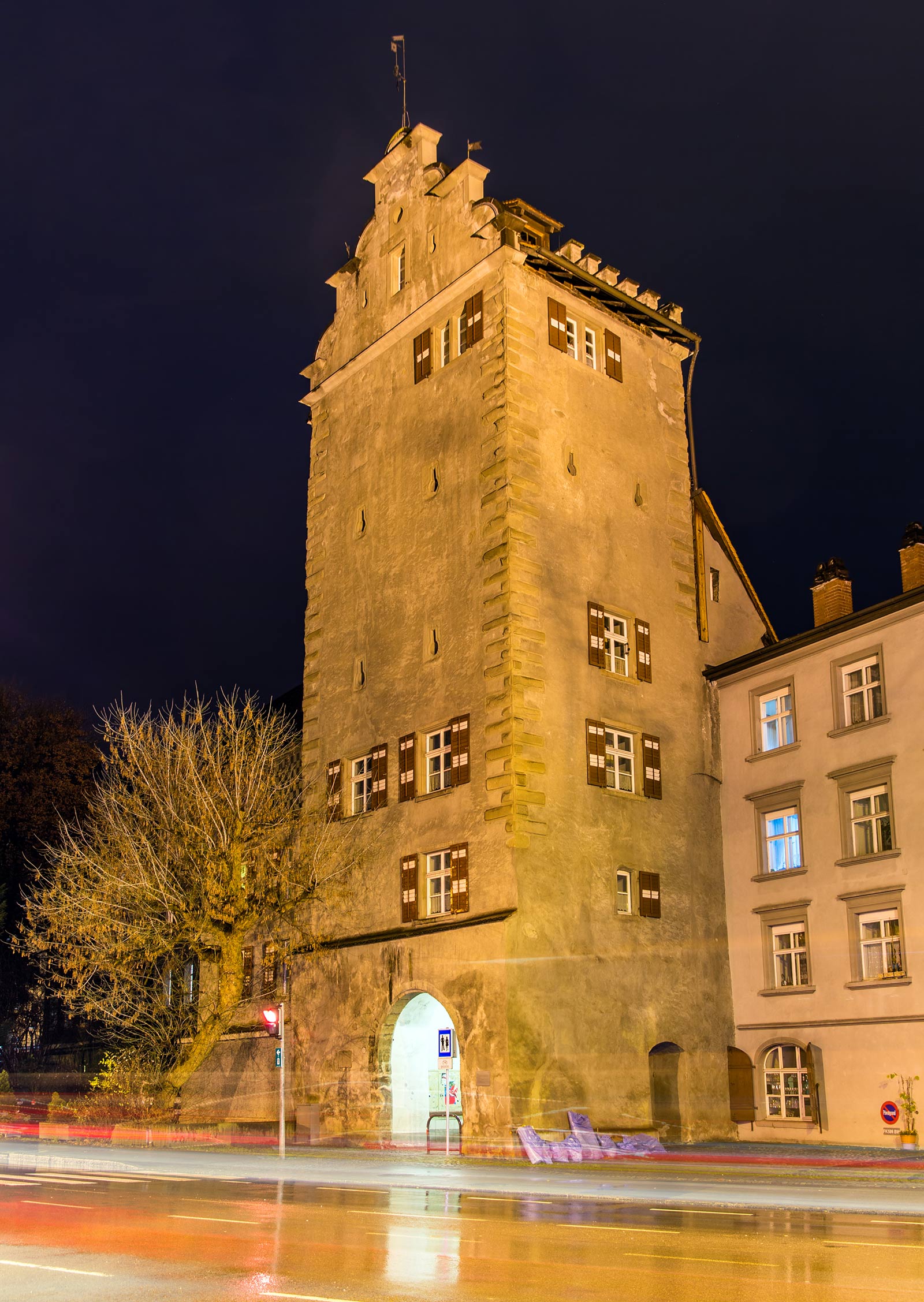
Formerly known as Salz- or Hewerstor.
Until 1615, the Chur Gate was known as the Hewer Gate, a name that may derive from the Feldkirch family of the same name, but also from Heinrich IV von Hewen, Prince-Bishop of Chur.
The name Salztor was first used in 1618. This name derives from the neighbouring salt storehouse, where salt delivered from Tyrol was stored. The salt storehouse was demolished in 1908.
The name ‘Churer Tor’ refers to the important trade route to Chur, which passed through this gate via the Heiligkreuz Bridge – the only crossing over the River Ill.
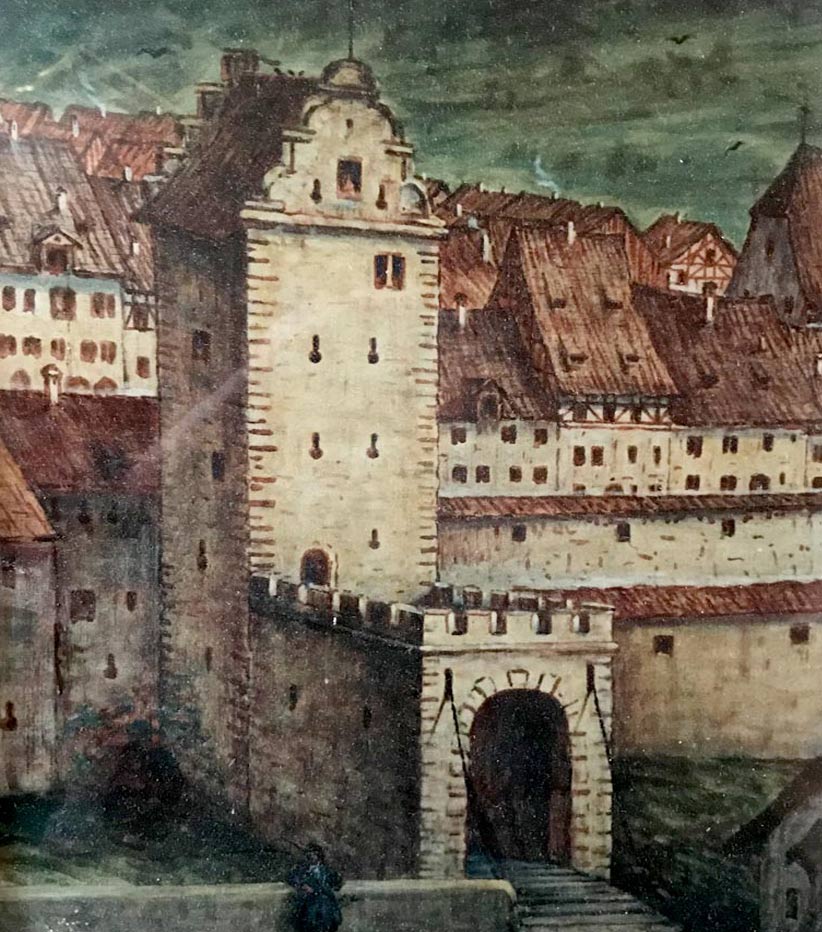
The ‘Churer Tor’ as a historical artefact
The ‘Churer Tor’, a landmark of Feldkirch, can be seen on historical postcards, on a 1960 postage stamp, and in historical pictures and photographs.
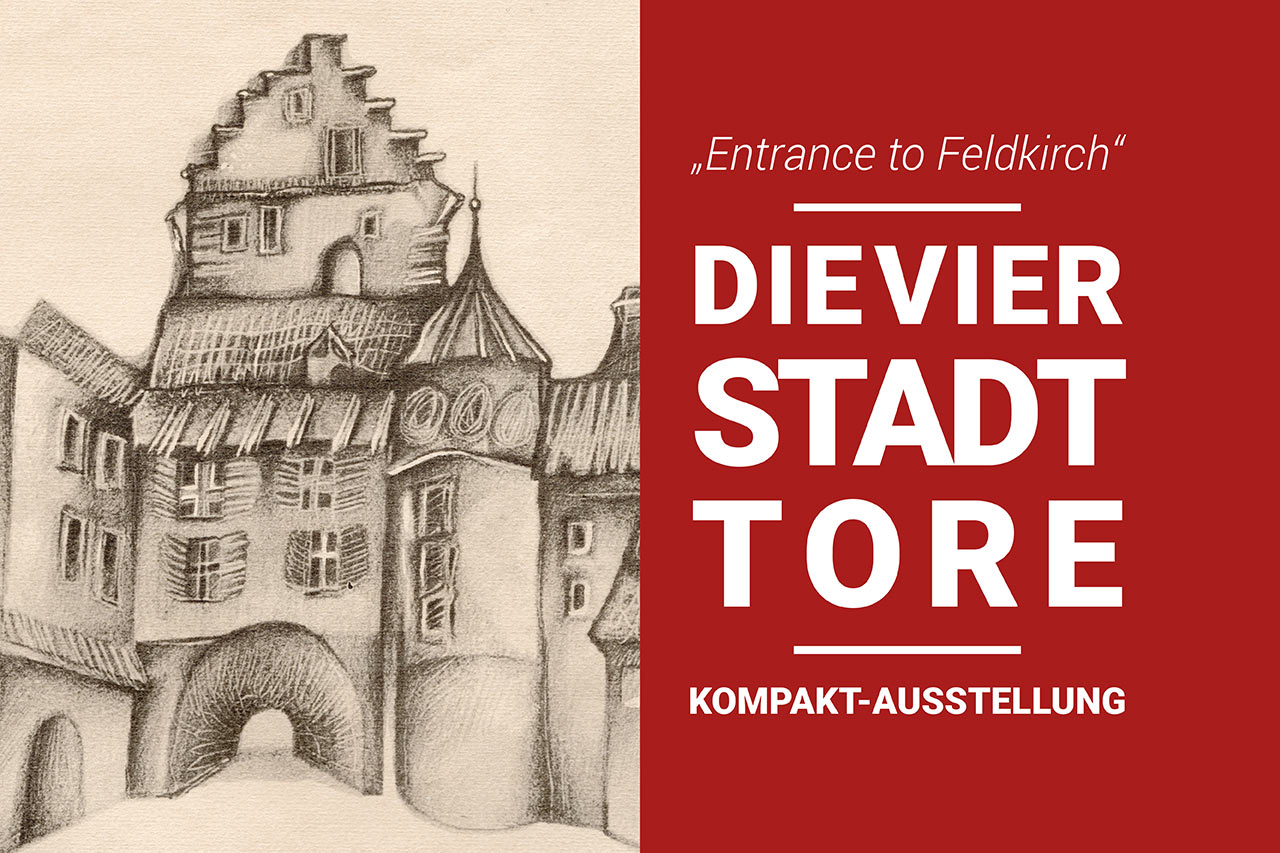
The Feldkirch City Gate: Austria’s gateway to the West
The Middle Ages meet the Renaissance
Reports on the city gate Churer Tor.
Here you can find the location of the Churer Tor.